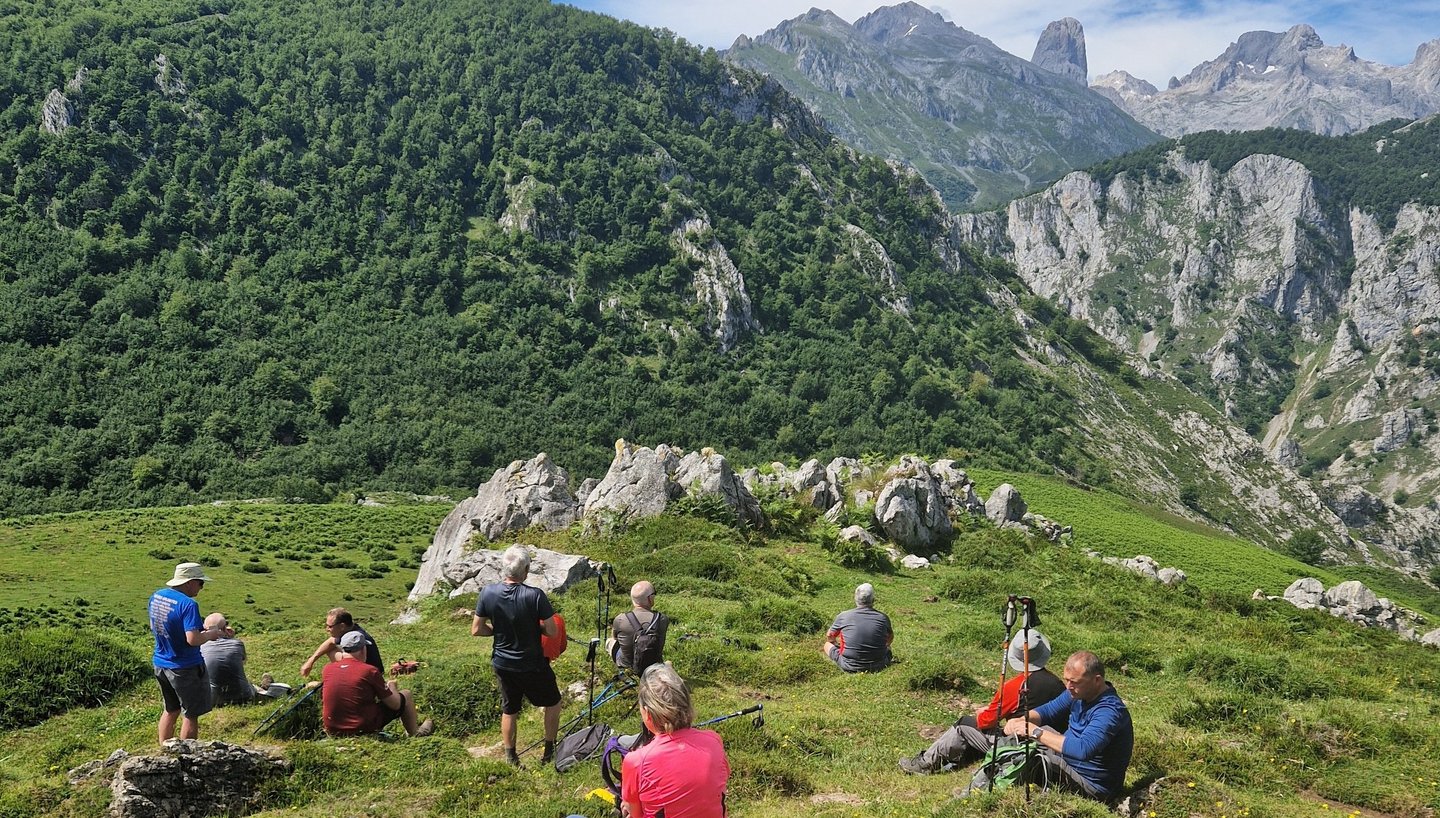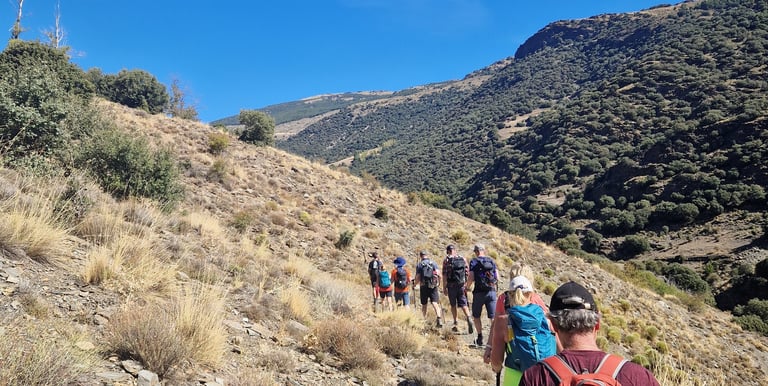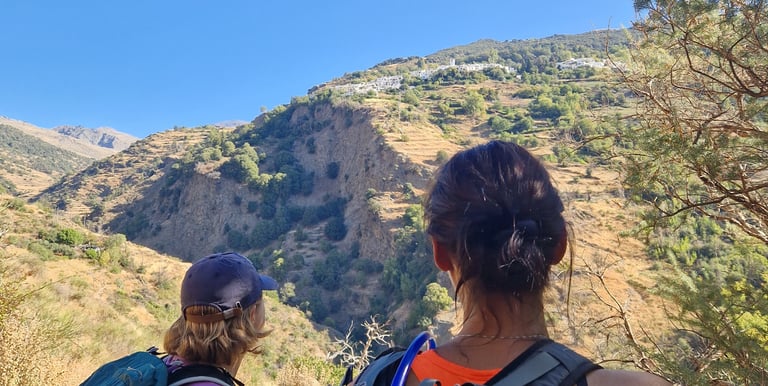
We are a family run walking company based in the beautiful, untouched region of Las Alpujarras, Granada, Spain. Ibex Trex caters for large groups, small groups and individual walking holidays. Any level of walking can be undertaken from strenuous trekking up to the amazing 3000 metre Ridge and
We pride ourselves on our excellent hospitality and skill for catering for every individual’s and groups needs. We strive to make our holidays include everything you need for a memorable walking holiday, with our fantastic walking and guiding through breathtaking landscapes laced with fabulous wildlife and flora, great food, accommodation and company.You can choose from Ibex Trex set itineraries or create your own tailor-made walking holiday.
Please contact us if you have any questions.
~The History~
he cultural interest of the region lies in its fifty-odd villages, which were the last stronghold of the Spanish Muslims, or Moors. Soon after the Castilians took Granada in 1492, all the city´s Moors were forced to convert to Christianity. Those who refused took to the hills, settling in this remote, inaccessible area. Constant pressure from the Christians led to a bloody uprising, the morisco rebellion of 1568, which was ruthlessly crushed , with the public execution of the leader, Ben Humeya, in the main square of Granada. Soon there followed a royal decree expelling from the Kingdom of Granada all people of Arab descent, since the "new Christians", as the converts were called, were all suspected of being "crypto-Muslims" in secret...The villages of the Alpujarra were resettled with some 12,000 Christian families brought by King Philip II from Galicia and Asturias in north-western Spain. However, these unique hamlets have retained their traditional Berber architecture - terraced clusters of grey-white box-shaped houses with flat clay roofs - which is still common in the Rif and Atlas mountains of Morocco
~The Gran Recorridos'~
The letters GR stand for "Gran Recorrido" (Long Journey). The GR7 is the footpath through Andalucia, which forms part of the European Route No. 4. The route is made up of itineraries, which are designed to avoid crossing or using tarmac roads or any roads used by traffic, wherever possible. The origins of the long European Route No.4 or E4 (totaling over 10,500 kilometres) come from the time, centuries ago, when man moved away from the seashores to explore living inland, marking the start of the hunting and gathering evolution, which later developed into the first farming and agricultural societies.The extensive footpath is based on this ancient trade route and it offers us an opportunity to walk the length of Europe. It begins at Tarifa, in the Straits of Gibraltar and after crossing the coastal mountains of Spain; it carries on across the Pyrenees, France, Switzerland, Austria, Hungary, Rumania and Greece.This great routre goes througgh the alpujarras and many of our walks use the route.Also in La Alpujarra is the circuit route of the GR142, which runs a lower level to the GR7 and is a more leisurely route but travels through just as wild and beautiful countryside and visits more whitewashed villages.
Flora, Fuana & The Sky
~The sky at night~
There is very little light pollution in the Alpujarras and so the sky lights up with the stars at night. From the comfort of the roof terrace in your accommodation you can spot masses of constellations, shooting stars, satellites and even other galaxy’s.
~Local wildlife~
The Cabra Montes is the Spanish ibex seen on rocky outcrops, which is a common occurrence and real sight to behold on any walk. Inhabiting the lower slopes are mammals like wild cats and boars, foxes, badgers and beech martens, while up on the higher slopes are other mammals including Mediterranean pine voles and weasels.
There are an outstanding variety of butterflies in this area, from the common Small Copper and Wood White to the more rare, like the Nevada Blue.
With over 60 species inhabiting the Sierra, the main draw for wildlife here is its abundance of birds. Common ones in woodland areas include the golden oriole, royal woodpeckers, barn owls, great tits and the hoopoe. On the higher slopes you can spot the Alpine accentor, black redstarts, northern wheateaters, rock buntings and the skylark. Also, nesting birds of prey include the golden eagle, peregrine falcons, sparrow hawks, goshanks, griffon vultures and the kestrel.
Even the odd harmless ladder snake or southern smooth snake may cross our pass during one of our walks.
~Native Wildflowers~
Most of the Alpujarras falls within the